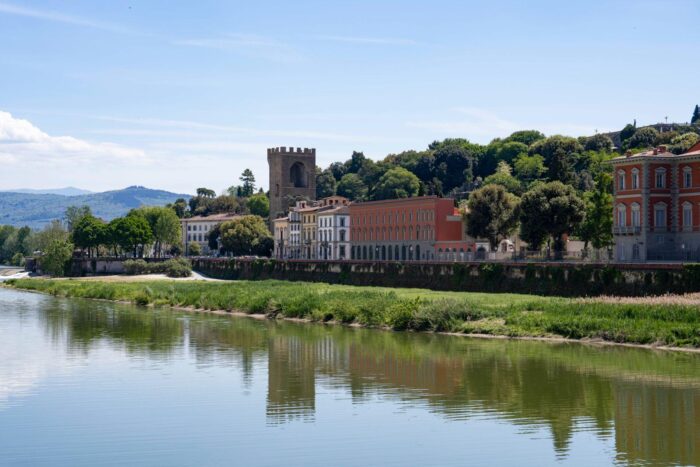

Think about the “museum landscape” of Florence. You’ve got everything from Ancient Etruscan and Roman at the Archaeological museum to Medieval art scattered around various collections, to tonnes of Renaissance art.. The Uffizi also has Baroque, 17th century and even some 18th-century paintings by the likes of Goya and Canaletto. The Novecento in Florence and Italy is decently covered at the eponymous (I had to use the world) Museo Novecento, but its permanent collection stops there. For anything more modern, there are temporary exhibitions, and the Museo Marino Marini which is pretty specific.
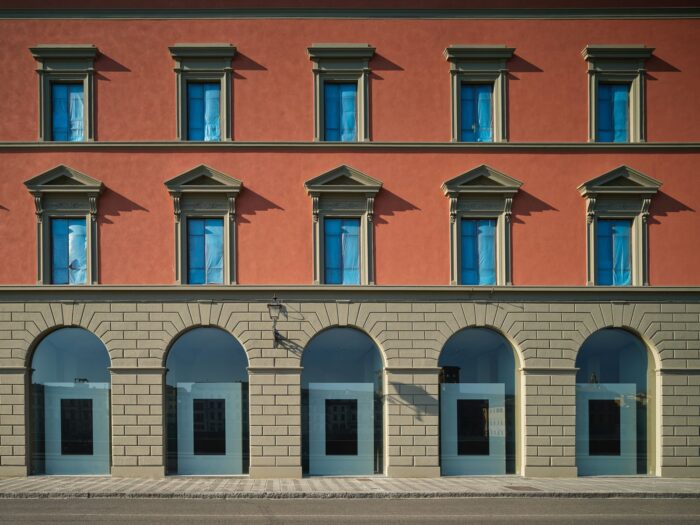
All this to build up to the news that Florence has a new “museum” of modern art, or rather, there is now a place that is open daily and that showcases Italian and international art from the Novecento to now. This is the Collezione Casamonti in its new permanent home on Lungarno Serristori. If you’ve heard of Casamonti before, it’s because the name is hardly new on the Florentine art scene. Roberto Casamonti is the owner of Tornabuoni art gallery since the early 1980s, which has offices in Florence, Rome, Milan, Forte de Marmi and other locations. In 2018, Casamonti opened his private collection to the public inside the beautiful Palazzo Bartolini Salimbeni in piazza santa Trinita, but the space wasn’t big enough to show all the works at once, so they had to rotate, which meant that they could not tell the whole story.
With the purchase of the new palazzo and 1000 square meters of renovated space, there’s now room for the whole collection (unless he’s thinking of buying a lot more?). The display is on two floors; we start by heading downstairs, where our viewing kicks off with the portrait that Roberto’s father commissioned to the artist Ottone Rosai – a name that may not be known to international viewers, but who merits an entire room in the Novecento museum. We find representative works from important Italian art movements like the Macchiaioli and Futurism. Interestingly, I visited with my mother, who may be more informed than I am about modern art but who wasn’t aware of many of these Italian names: this attests to the need for a museum like this, and to its useful educational function.
There’s metaphysical art represented by the one and only De Chirico including an early work that looks nothing like his famous later paintings, and exemplars of Cubism and Surrealism (including a Cubist Magritte, who you would think of as a Surrealist!).
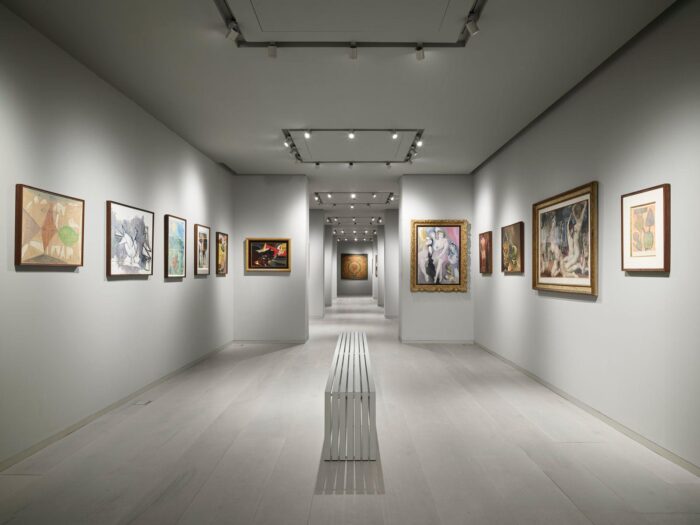
The area is divided into many small rooms – I’m not sure if the architects created them or if the former stables were simply built this way. This works nicely as a way to take advantage of the space and create small thematic niches. In one room there is an impressive concentration of major names of 20th century art – Picasso, Mirò, Magritte and Dalì.
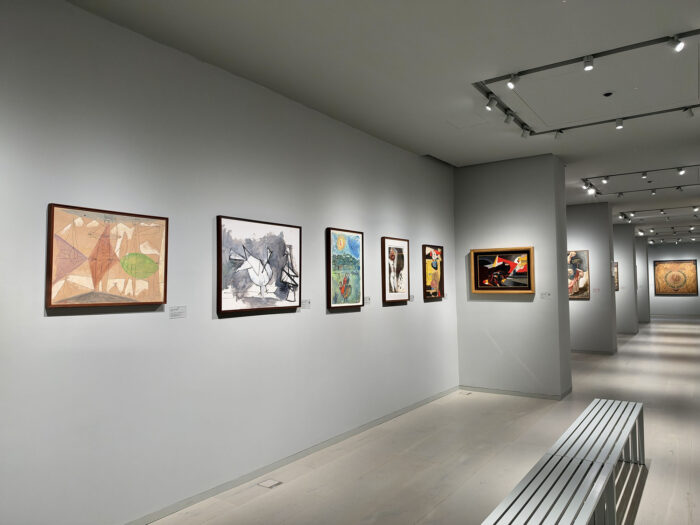
The luminous main floor gallery has higher ceilings and more space for the impactful, sometimes colourful works of the post-war period. We actually start out with more black-and-brown Arte Povera and some of the abstract artists that Casamonti championed – Michelangelo Pistoletto with a typical mirror-painting, Lucio Fontana with his cut canvases, and the scorched materials of Alberto Burri.
I enjoyed the opportunity to hang out with works by super famous modern artists like Andy Warhol, Maurizio Cattelan, Marina Abramovic, Jean-Michel Basquiat and Keith Haring. There’s op art and pop art, graffiti art, video art and performance art.
There’s also room to discover something new. For me this is Alighiero Boetti (1940-1994), an Italian conceptual artist whose huge embroidery piece “Tutto” dominates one of the central bays of the gallery. He is apparently famous for working in various media and often delegates execution to others (as in, he did not embroider “Tutto” – part of a series – but had it made by a group of women in Afghanistan, based on drawings of numerous objects made by his assistants). Another work of his places those colourful dot stickers that you might have played with as a child, if you’re part of my same generation, stuck to a matrix. And another yet is part of his map series – all key types of works for an Italian artist who has commanded high prices at auction but who was not yet on my radar.
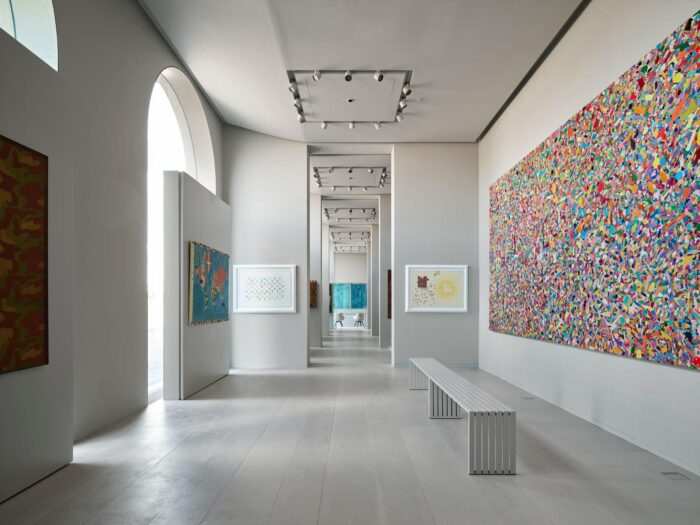
The Collezione Casamonti is a gift to the city, to Florentines who can enjoy a new and quiet space, and to visitors looking for a different lens through which to see Italian art. Guided tours are available, which I think would be helpful for an international public, who also might benefit from some introductory panels about the various movements in Italian art represented here.
Visitor information
Collezione Casamonti
Lungarno Serristori 17
Open Tuesday to Saturday, 10am to 7pm
Tickets €15